HYDE PARK: TAMPA’S VICTORIAN ERA SUBURB STILL GROWS

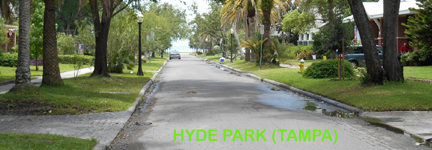
Hyde Park was Tampa’s first Western suburb, stretching southward from the mouth of the Hillsborough River down the east side of the Interbay Peninsula. In 1886 O. H. Platt of Hyde Park, Illinois, purchased the Robert Jackson farm on the south side of the river in anticipation of a bridge.
floridatravelerhydepark-title

Two years later railroad baron Henry B. Plant constructed his Tampa Bay Hotel next door and not only did the bridge become a reality, and the subdivision of Queen Anne and Colonial Revival homes made Upper Hyde Park the ideal place to live in Tampa for generations. Jesse J. Hayden, who ran the ferry service across the river, and Robert Jackson started other subdivisions and a housing boom was on.

HOW TO GET THERE: Exit I-275 Ashley Street in downtown Tampa, cross the River on Kennedy Boulevard and turn left on Hyde Park Avenue. You will start the tour as you pass under the Cross-Town Expressway overpass.

HISTORIC PLACES TO STAY AND EAT: Hyde Park is mostly Victorian residential, but South Howard Avenue to the west of Old Hyde Park Village has become a notable restaurant row, featuring BERN’S STEAK HOUSE, 1208 South Howard Avenue, (813)251-2451), for forty years one of America’s most notable steak palaces (EXPENSIVE). MISE EN PLACE, 442 West Kennedy, (813) 254-5373, in a vintage 1920’s building opposite the University of Tampa, is a notable place. For seafood, continue to COLONNADE, 3401 Bayshore Blvd., (813)839-7558), a landmark since the 1930’s.

PETER O. KNIGHT COTTAGE (1887), 245 Hyde Park Avenue, a Victorian cottage serving as headquarters for the TAMPA HISTORICAL SOCIETY. It was the Honeymoon home for the man, who after serving as first lawyer and second mayor of Fort Myers (since he was 20 he couldn’t run as “first” mayor), as well as founder of Lee County, came to Tampa to start the Exchange National Bank, the Tampa Gas Company, and Tampa Suburban Railway. The building was the site of many key business decisions that changed the face of Tampa.
floridatraveler hydepark-hutchinson

Hutchinson House

on the right is the:THOMAS CARSON TALIAFERRO HOUSE (1890), 305 Hyde Park Avenue, a two-story Georgian Revival, designed by St. Louis architects Grable, Weber, & Groves for the founder of the First National Bank. One of the first house guests wasbrother James, a United States Senator. It is now the Center for Women. A few doors down is the: MOREY HOUSE(1905), 315 Hyde Park Avenue, a brick Classical home of the President of the Morey & Company Cigar Company and founder of the first resort on Pass-A-Grille Beach, Pinellas County’s first beach-side village. This and many other mansions in this area are now zoned for offices.

TURN LEFT ON DELEON, TRAVEL ONE BLOCK, AND TURN LEFT ON ONE WAY PLANT AVENUE, staying on the far left side by the:

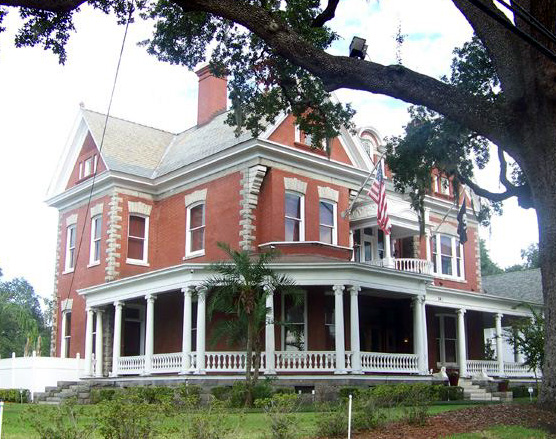
JAMES B. ANDERSON HOUSE (1892), 349 Plant Avenue, a granite trimmed mansion designed by Francis J. Kennard. As Treasurer of the Tampa Board of Trade, Anderson could afford the six fireplaces and third floor ballroom.
floridatraveler hydepark-anderson

Anderson House

Up the street is the: SUMTER LOWRY HOUSE (1893), 333 Plant Avenue, the three story clapboard home of the colorful City Councilman and helped start Tampa’s Lowry Park Zoo and St. Andrews Episcopal Church..

Across the street is the:  ALBERT JOHNSON HOUSE (1891), 332 Plant Avenue, started as a hunting lodge for Marshall Field and converted by lumberman Johnson. In contrast, one block west, is:

the  O. J. SPAFFORD HOUSE (1882), 315 Plant Avenue, a Colonial Revival built by an insurance executive and later Tampa Women’s Club (1922) headquarters. This is a 11,484 square foot structure.

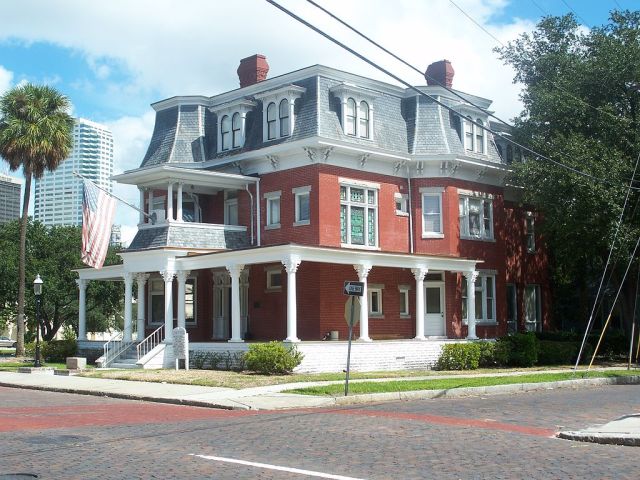
As you CROSS HYDE PARK PLACE, on the right is the notable: CURRIE J. HUTCHINSON HOUSE (1908), 304 Plant Avenue, the finest Second Empire mansion in Tampa, home of a former City Councilman. It is now a law firm office.

Due to one way streets, TURN RIGHT ON PLATT STREET and then RIGHT ON BAYSHORE BOULEVARD. STAY IN THE RIGHT LANE despite the temptation to look at Tampa General Hospital and Davis Islands.

 TURN RIGHT ONTO MAGNOLIA STREET, where one block north by Bay, was the site of the  CARLOS DUDLEY HOUSE(1905), 52l Bay Street, a two-story Colonial Revival with a big bay window. On the opposite corner is the   ISBON B. GIDDENS HOUSE (1910), 607 Magnolia Street, a good Prairie style house of an early City Councilman.

TURN LEFT ON DELEON, go two blocks, and TURN RIGHT ON FOUR LANE SOUTH BOULEVARD, past:
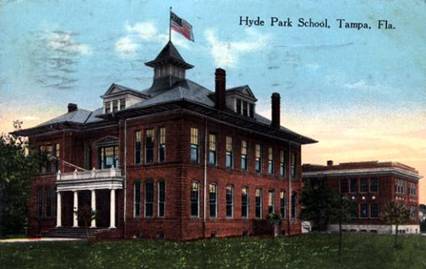
floridatraveler hyde park school

JOHN GORRIE SCHOOL (1899), 502 South Boulevard, the oldest continuously used Tampa elementary school, and finely restored by its proud alumni. An old street car shed served as a bus shelter.

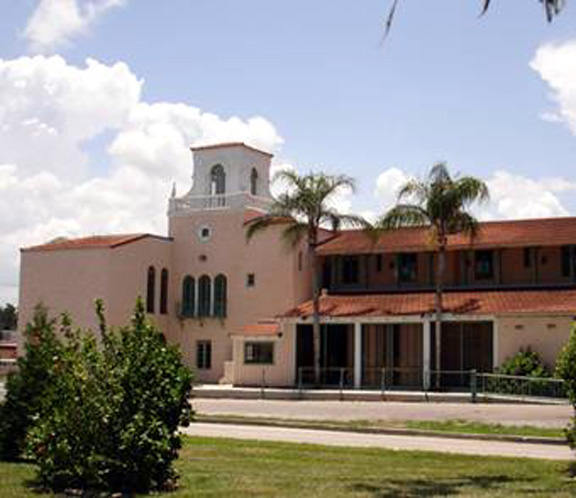
TURN RIGHT ON HORATIO and stop by the last structure on the left, the: FRIDAY MORNING MUSICALE (1926), 701 Horatio Street, the one story Mediterranean community center still in use for plays and shows.  I remember going to my daughter’s piano concerts in this fine auditorium.
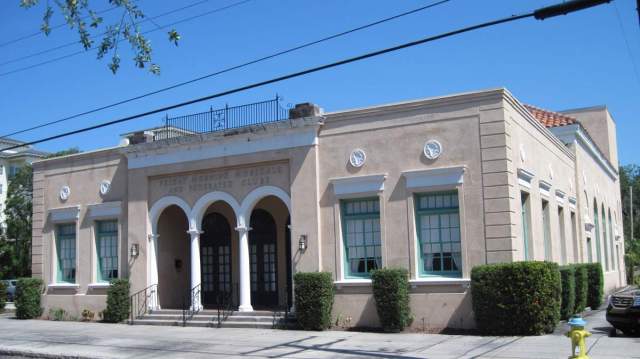
floridatraveler hydepark friday musicale

The Friday Morning Musicale

Before turning RIGHT ON BREVARD STREET, notice the house across the street on your left: the   DOYLE CARLTON  (1920), 617 Horatio Street, the modest frame house from which Tampa City Attorney Carlton left in 1929 to become Governor of Florida. Next door are the CARLTON APARTMENTS.

TRAVEL TWO BLOCKS DOWN BREVARD and TURN RIGHT ON BAY, then LEFT ON SOUTH, and finally LEFT ON SWANN AVENUE.

At 705 Swann Avenue is the  TAMPA REALISTIC ART CENTER (1899), once the city’s first hot lunch center (at Gorrie School) and later the Hyde Park Branch Library. Up the street at   611 SWANN AVENUE (1923) is a good example of the bungalow houses that constitute much of the Lower Hyde Park area.

TURN RIGHT ON BREVARD where the second house on the right is the

 PAT WHITAKER HOUSE  (1914), 727 Brevard Avenue, a blend of Gothic and Spanish complete with an octagonal tower on the waterfront side.  TURN RIGHT ON busy BAYSHORE, driving slowly past the big mansions. Just past South Boulevard is the (18) WATSON DORCHESTER HOUSE (1912),  901 Bayshore Boulevard, a two story Spanish masonry home of a Tampa doctor and realtor.

Next door is the  ISAAC MAAS HOUSE (1924), 907 Bayshore Boulevard, the decorative residence of one of the two German Jewish brothers who started Florida’s largest department chain. My uncle Victor Kiralfy, a traveling salesman before he started a Georgia department chain, was always invited to meals in this estate.

You may want to continue another six miles down “mansion row” but please TURN RIGHT ON DELAWARE, the second street, right in front of the:  FRANK BENTLEY HOUSE (1924), 1005 Bayshore Boulevard, a Georgian masonry estate owned by the President of Bentley-Grey Dry Goods. It is a six bedroom, four bath, 5,491 square foot house. The first house on the left is the: HOWARD MACFARLANE HOUSE (1923), 903 Delaware Street, a clapboard home for the son of the founder of West Tampa, Hugh MacFarlane. Notice the brick house while you note on your right at the end of the block, the: LEO WEISS HOUSE (1929), 902 Delaware Street, the finest English Tudor estate in Tampa, designed by Christopher Robinson.
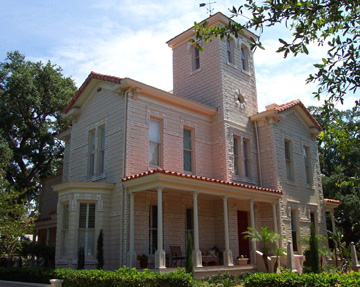
floridatraveler hydepark-morrison-newport2

The Morrison House Is The Oldest

CROSS MORRISON and proceed to the last home on the left, the: WILLIAM HIMES HOUSE (1911), 801 Delaware Street, a three story nine bedroom, seven bath, 10,571 square foot Greek Revival mansion of a noted lawyer.
TRAVEL TO SWANN AVENUE and pause to notice the historic markers and the facade of the l9l3  WOODROW WILSON JUNIOR HIGH SCHOOL, Tampa’s oldest middle school. TURN LEFT ON SWANN and then LEFT ON NEWPORT, a street lacking Delaware’s trees, but full of great houses.

The second house on the left is the: M. LEO ELLIOTT HOUSE (1928), 710 Newport Street, a rather plain Dutch-Colonial for the famous architect responsible for such West Coast landmarks as Tampa City Hall and Sarasota High.

Two houses down on the left is one of Elliott’s best houses, the: HENRY LEIMAN HOUSE (1926), 716 Newport Street, a wonderful Prairie Style residence. The two story frame-stucco U-shape house of cigar box magnate Leiman requires a look from several angles.

CONTINUE PAST INMAN to the last house on the right, the:) OWEN LOWTHER HOUSE (1912), 845 Newport Street, the detailed edifice of Tampa’s largest naval store owner. It has a full basement.
floridatraveler hyde-park-village

At 850 Newport Street is the district’s oldest house, the 1885 WILLIAM A. MORRISON HOUSE, a remodeled Italinatehomestead which was once surrounded only by orange groves. The foundation blocks are homemade and reinforced by trolley rails. State Attorney General Thomas Watson once resided here.

At 901 Newport Street is the GRENVILLE HENDERSON HOUSE (1910), the Colonial Revival residence of a realtor and Florida State Senator.

TURN LEFT ON MORRISON and stop at Willow to notice on your left the: ANGEL CUESTA JR. HOUSE (1921), residence of the Treasurer of Cuesta Rey Cigars. Across the street on your right is the: HARRY J. WATROUS HOUSE (1911), 1301 Morrison Street, a large clapboard with five fireplaces created by M. Leo Elliott.

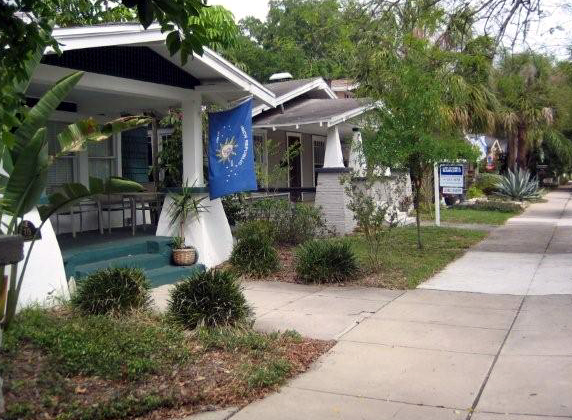
BUNGALOW TERRACE (1916), Rome and Inman at Swann Avenue, is a unique mini-subdivision of nineteen California bungalows set up for winter residents. The houses, mostly “airplane style bungalows” face each other across a sidewalk, with rear alleyways serving as off-street parking. They are just one block from Old Hyde Park Village, the area’s upscale Victorian style shopping district.
floridatravele rhydepark-bungalow terrace

Bungalow Terrace

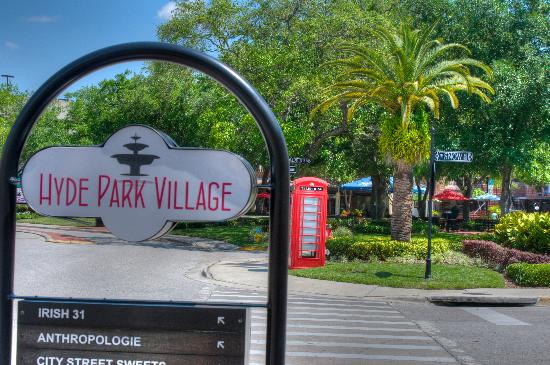
At Oregon at Swann, Hyde Park’s shopping and restaurant development, Hyde Park Village and nearby South Howard (SOHO) have become an area of restaurants, assured of being a popular, convenient place for people who like urban living in the stable, beautiful neighborhoods of Hyde Park.

 

Posted in florida history | Leave a comment

New Port Richey: Tampa’s Northern Neighbor


floridatravelernewport-banner

PORT RICHEY AND NEW PORT RICHEY, West Pasco’s dual coastal communities, are best known today as booming retirement centers, but both towns had more basic origins. PORT RICHEY was started in 1883 by Missourian Captain A. M. Richey, who homesteaded on an island at the mouth of the Pithlachascottee River. NEW PORT RICHEY, once Hickory Hammonds, made the name concession in 1914 when the Port Richey Company began heavy development.

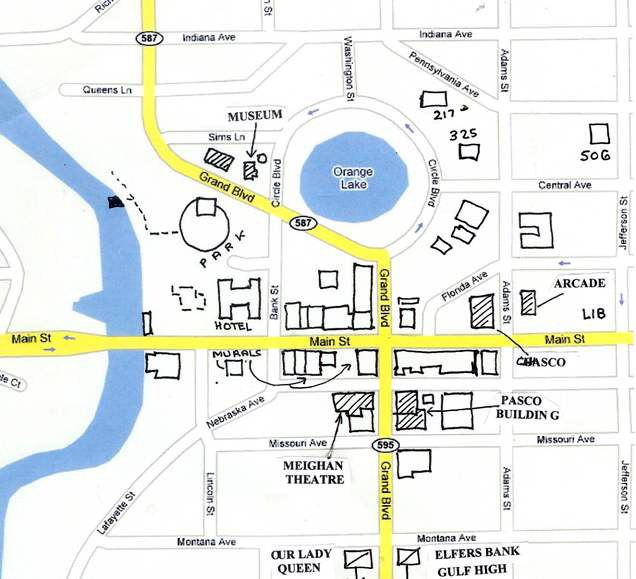
WHERE TO START: HEAD NORTH ON FL 595 (South Boulevard) from FL 518 (Trouble Creek Road), which connects with US19 five miles south of Port Richey. By taking FL 595 instead of US19, you travel north on the original (Grand Blvd.) entrance to New Port Richey and go thru Elfers, a once incorporated town with old houses.

floridatravelerPORTRICHEYMAP

On your right after a mile you’ll see at 4116 Grand Boulevard the FIRST BANK OF ELFERS (1925), a Boom Town bank in the town started by J. M. Mitchell, developer of the first sizing citrus machine. Just south of High Street, on the right is OLD GULF HIGH SCHOOL (1922), used later by Pasco-Hernando Community College. If you travel to 520 High Street, you’ll see the attractive OUR LADY QUEEN OF PEACE CHURCH (1919), started by Rev. Father Ulrich, and featuring an Italian marble Shrine of Fatima (1954) by Wilson Cornell. The original one-story frame church is at 6710 Washington Street.

If you drive around Elfers, you should look at: OLD EDENFIELD STORE(1932), 4049 Grand Boulevard, a landmark of native rock and concrete and a building that has been a grocery, an auto parts store, and more; the OLD ELFERS SCHOOL (1914), 4136 Barker Drive, a two-story limerock and white brick Adult Center; and the PORTER L. PIERCE HOUSE (1913), 4121 Redleaf Drive, a frame house with tongue and groove walls.

A worthwhile sidetrip is to Centennial Park at 5740 Moog Road to see the SAMUEL BAKER HOUSE(1882) , the oldest Cracker vernacular in West Pasco County and a unique house with no structural frame.

Crossing the Pithlachascotee River into the commercial district of New Port Richey, you’ll note at 315 South Boulevard,) THE NEWPORT RICHEY TOURIST CLUB. By Nebraska Avenue is the THOMAS MEIGHAN THEATER (1925), 203 South Blvd., named for a silent film star and brother of architect James Meighan who also built the Palms Theater in 1927 on East Main.  It was Meighan who brought a group of Hollywood celebrities to the town to vacation and invest.

floridatravelerNEWPORTtheatre

At 5327 Grand Boulevard is the 1920 CEMMIE BUTLER BUILDING, a business complex built with native rock. She once ran a personal laundry service at this place.

Across the street is another fine Mediterranean Revival structure, the PASCO BUILDING (1921), with an octagonal corner tower. It is a neat building with some nice shops. Down Main Street at 5743 is the CHASCO INN, built in 1924 and the oldest downtown commercial structure – a building that has served as post office, hotel, and bus station.

At 5728 Main Street is the MICHAEL MILBAUER BUILDING (1919), the first brick building in New Port Richey.

At 5805 is the ARCADE BUILDING (1927), another structure that once housed the post office.

TURN LEFT ON MAIN STREET. On your right a few blocks, TURN INTO THE ENTRANCE WAY of the: HACIENDA HOTEL(1927), 5621 West Main Street, once a 55 room tourist complex designed by James Meighan. Early investors may have included Gloria Swanson, Joe E. Brown, and Mary Pickford. Ed Wynn emceed the grand opening and for two decades it was a social center. As theChristian Hotel in the 1940’s, Rev. Billy Graham was a waiter.

floridatravelernewport-HACIENDA HOTEL

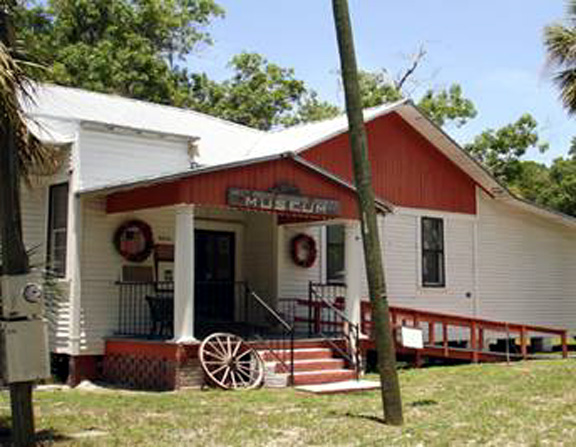
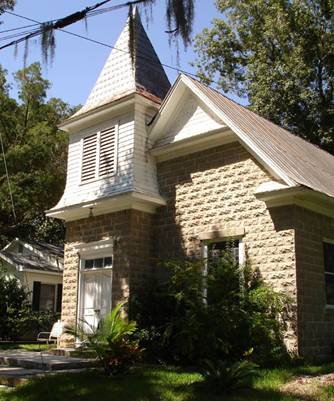
EXIT VIA BANK STREET GOING NORTH toward the PORT RICHEY MUSEUM, 6431 Circle Boulevard, once the SEVEN SPRINGS SCHOOL and open on weekend afternoons. An old church has been added to this historical park. The WEST PASCO HISTORICAL SOCIETY meets here. On your left is SIMS PARK and the lake is ORANGE LAKE surrounded by Circle Boulevard. The playground is one of the best in the region.
floridatravelerNEWPORTHistoryMuseum

DRIVE AROUND THE LAKE to note the fine homes and the abundance of older churches. At 217 Circle Boulevard is the FIRSTBAPTIST CHURCH (1923) started in a store. At 325 Circle Boulevard is the fine COMMUNITY CONGREGATIONAL CHURCH.

Just two blocks east at 506 Jefferson at Pennsylvania Avenue is the METHODIST CHURCH (1916).

DRIVE NORTH on NORTH BOULEVARD along the east bank of the Pithlachascotee River, past Mediterranean Revival homes and newer tract models. TURN RIGHT ON US19 and turn LEFT ON BAY BOULEVARD which shirts the northern limits of MILLERS BAYOU.

Off Bay Park Drive is WILMSLOW PARK with a good view of the Bayou. Continue down Bay Park Drive to end your trip at RITTER POINT on the Gulf of Mexico.

Off Sunset Boulevard is the OELSNER MOUND, the remains of a late Weeden Island Indian mound execavated in 1879 by S. T. Walker of the Smithsonian Institute.


Posted in attractions, florida history, florida vacations, Historic Buildings, Historic Hotels & Inns, museums | Leave a comment

The First Thanksgiving: St. Augustine, September 8, 1565

I grew up in Framingham, Massachusetts, so I always viewed the first Thanksgiving in America was at Plymouth Plantation in 1621.

Then I moved to Florida.

Forty two years before the English successfully cultivated a community in Jamestown, Virginia, and fifty-six years before the Pilgrims feasted in New England, the Spanish colony of St. Augustine celebrated the first Thanksgiving feast with the local Timucuans.

It was September 8, 1565, and following a Catholic religious service performed by Father Francisco Lopez, the fleet chaplain, the Spanish settlers sat down to a communal meal with the area Indians.

floridatraveler first thanksgiving

Mural at St. Augustine Cathedral of Thanksgiving

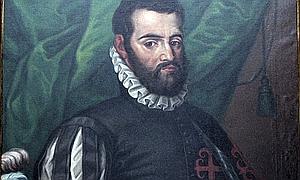
Despite his ruthless massacre of the Protestant colony of Fort Carolina on the St. Johns River, Pedro Menendez de Aviles, founder and first governor of Spanish La Florida, was an extremely devout Catholic, dedicated to spreading the faith to the Indians even using his own money.   When he arrived on the shores of Florida, Menendez had Lopez go ashore first with a cross so he and his forces could kiss the cross when they reached land.  Menendez was even buried in Franciscan robes.

floridatraveler menendez

Governor Menendez The First Host

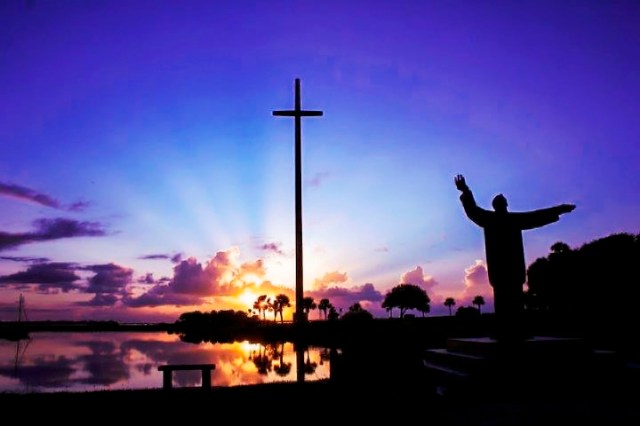
The massive 208 foot Great Cross, the largest stainless steel freestanding cross in the world, has since 1965 stood in St. Augustine’s waterfront to symbolize the even.  Nearby is a coquina stone statue of Father Lopez thanking God.

floridatraveler The-Great-Cross and lopez

The Great Cross and Father Lopez

The first Thanksgiving hardly resembled the feast at Plymouth Colony since the Spanish did not have time to harvest a crop or bring in many animals from Cuba.  There was no sign of Ben Franklin’s favorite bird, the turkey, on the table.

floridatraveler pork and garbanzo beans

Pork and Garbonzo Beans

Instead the Spanish and Florida Indians dined on a meal of salted pork and garbanzo beans, with lots of bread and red wine.  I doubt if many Americans would want to substitute their New England turkey and cranberries for any of the Florida fixings.


Posted in florida history | Leave a comment

San Marco: A Little Europe In Jacksonville

SAN MARCO is a small and mainly upscale neighborhood south of downtown Jacksonville across the Saint Johns River. Developed in the 1920’s the San Marco neighborhood is diverse but mostly popular with young professionals due to its trendy look.   The area was originally a farm on the eastern bank of the St. Johns River, known as the community of Oklahoma and home to Harrison Reed, who was elected Florida’s Reconstruction governor in 1868 and 1873.
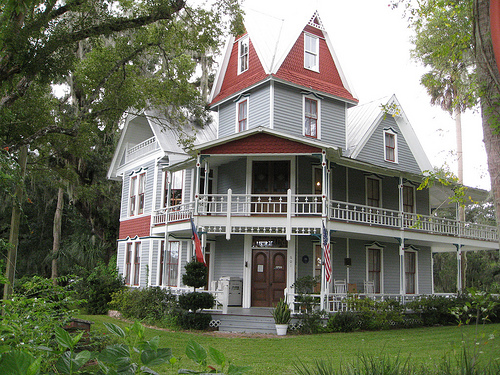
The key to the area’s growth was the construction in 1921 of the ST. JOHNS RIVER BRIDGE which made the area an accessible suburb rather than a distant community.

The center of the community is THE SQUARE, an upscale commercial district which contains several key landmarks.

floridatraveler_San_Marco_Square_Jacksonville.jpg

The area has a European feel and is the home to many of Jacksonville’s best restaurants.

The 1926 SAN MARCO BUILDING at 1978 San Marco was the headquarters of the original developers of San Marco, but today houses several fashionable stores. The Mediterranean Revival style fits the area’s oldest buildings.

Another downtown mark is the SAN MARCO THEATRE (1938) at 1996 San Marco. It is a neat Art Deco structure, but it should also be noted the area even has a  LITTLE THEATRE (1938) at 2032 San Marco to show its arty desires.floridatraveler san_marco_theater

Other buildings in San Marco include the original SOUTH JACKSONVILLE CITY HALL and the homes of the Swisher family. CARL S. SWISHER’s house (1929) at 2234 River Road is a Mediterranean Revival on part of the Villa Alexandria estate.

Carl donated the Library at Jacksonville University and dozens of other civic structures. His father JOHN H. SWISHER, the original cigar manufacturer and founder of King Edward Cigars (once #1 in the world) built a mansion at 2252 River Road.

ST. PAULS CHURCH (1888) was saved and moved to 1652 Atlantic Avenue to serve as the San Marco Preservation Hall.

floridatraveler st pauls church.jpg


Probably the most famous public landmark is the LANDON HIGH SCHOOL & JUNIOR HIGH COMPLEX (1926) at 1819 Thacker Avenue, an Italian palace of a Mediterranean Revival structure designed by the notable firm of Marsh and Saxelbye who did the San Marco Building.


Posted in florida history | Leave a comment

Florida: Home of the 13,000 Year Old Art Work

Most of us were taught in school about the migration from Asia across the frozen Bering Straight of the ancestors of today’s American Indians (the Clovis Theory).  In Florida there are two archaeological sites that may challenge that as the only story of ancient North Americans.  Florida is becoming a place of mystery for archaeologists and anthropologists.

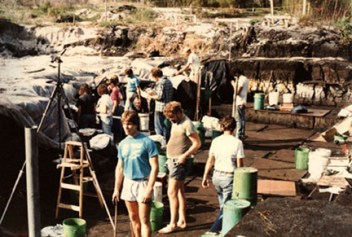
In 1982 a backhoe operator of the EKS Corporation dug up human bones in a black peat bog one miles southeast of Highway 50 and I-95 in Titusville.  Draining the the Windover Bog researchers discovered nearly 170 bodies wrapped in the oldest flexible fabric ever found in North America.  The bog had such good PH neutral and little oxygen that the bodies were not very decayed and many skulls had brain tissue.

floridatraveler Windover Bog

The Bog Excavation Before Letting Water Back In

The DNA research was originally said to be of Asian origin with a rare haplogroup X and some noted that this group was the only demonstrated instance of the extinction of a group of Native Americans with no close surviving relatives.  The study found the bodies were from 6,990 to 8,120 years old.

floridatraveler WINDOVER_ARCHEOLOGICAL

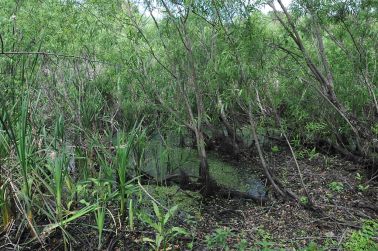
Nature Returns The Bog To Its Old Look

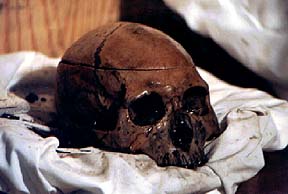
Some anthropologists were upset at the distribution of the samples – many now reburied.  To some the one remaining photograph of one of the skulls (taken by a newsman) looked more European (Solutrean) than Asian.  Dr. Joseph Lorenz from Coriell Institute for Medical Research compared the Windover DNA with global samples and noted the bone DNA from the five Floridians he studied looked European.

floridatraveler windover Skull

Only Windover Bog Skull Photograph

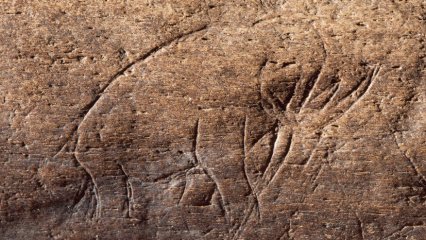
To add to the mystery an amateur archaeologist James Kennedy of Vero Beach found a mammoth bone with a man-made drawing of a beast on it.  Vero Beach was already the home of the Vero Man’s skull, found in 1915 in the company of ice-age animal bones dated to 12,000 years BC.

The Kennedy artifact shocked scientists who believed that mammoths and mastodons had become extinct in Florida by at least 10,000 years.   After careful study with an energy dispersive X-Ray spectroscopy and  a scanning electron microsope, forensic anthropologists at the Pound Human Identification Laboratory at the University of Florida declared that both the carving and the bone’s surface were the same age.

floridatraveler oldest art in america

The Oldest Art Work In America: The Vero Mammoth

Both the University of Florida and the Smithsonian believe the artifact to be at least 13,000 years old, making it the oldest piece of known art in North America.

Posted in florida history | Tagged , , , , , | Leave a comment

Disney’s Latest Two Restaurants Are A Wild Contrast Of STyle

While Walt Disney World’s Disney Springs is just entering its final stages with the two-story shopping mall and second parking garage going up, the local restaurant scene is booming for the winter season.

Two new restaurants recently opened and are complete opposites in every manner of thinking.

Marimoto Asia is a giant two-story modernistic, very arty masterpiece of architecture filling the old Masquerade Disco of Pleasure Island with sophisticated light beams.  The Hanger resembles a dark, run-down 1940’s dive bar where painted ladies might hang out for sailors.

floridatravelermotoceilinglights

Moto Is A Rainstorm of Lights

Moto, named for its celebrity Iron Chef is WDW’s largest Asian restaurant and its menu covers everything from sushi to the specialties of Duck for Two and Moto’s amazing ribs. Prices for the noodle dishes and sushi are reasonable for a tourist spot with better deals at lunch for budgeting families.

floridatraveler-lunchspecial.

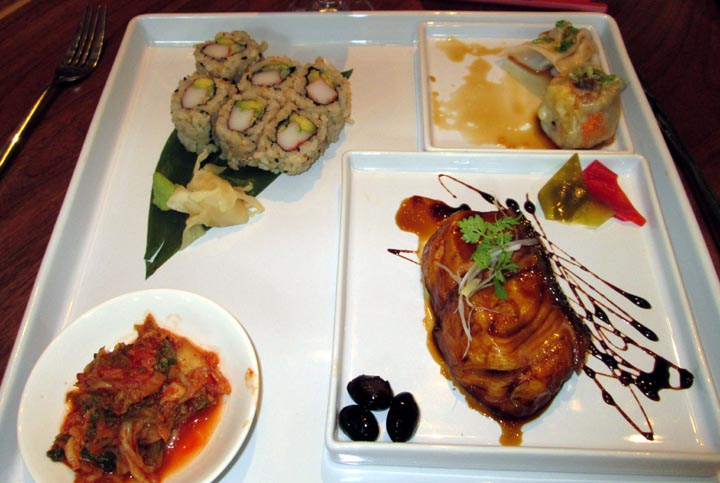
Lunch Special minus Soup and Salad

I found the set lunch of black cod, miso soup, salad, and sushi a good meal for $26.  The lamb rice was an amazing dish and the desserts, while not exactly Asian, were huge and perfect for sharing.  The hand-picked staff is professional and all-knowing of the menu.

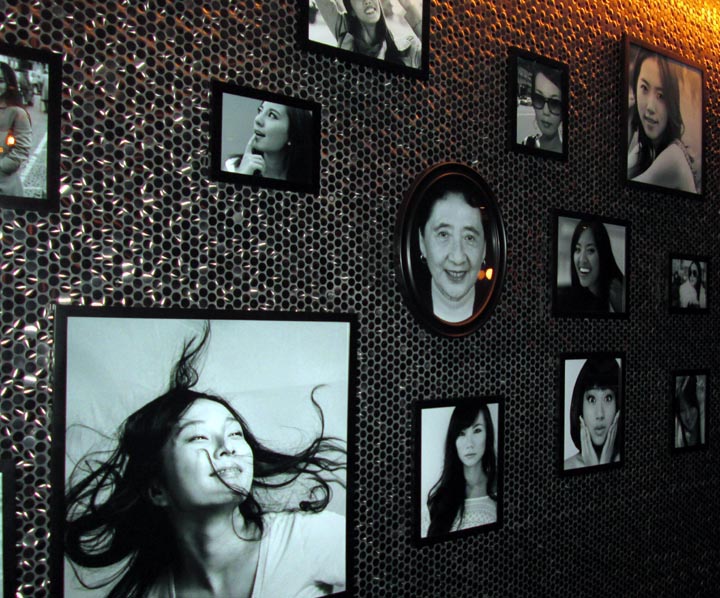
Moto merits a full scale tour of the second floor sushi bar and the bottle-lined upstairs bar. Even the bathrooms with their walls of opposite sex black and white photographs deserve mention.

floridatraveler-motobath

Moto Mens Bathroom Wall

Jock Lidsey’s Hangar Bar is stated to be the home of the guy who flew Indian Jones over Florida (sic) while probably locating a prime waterfront spot on Village Lake.

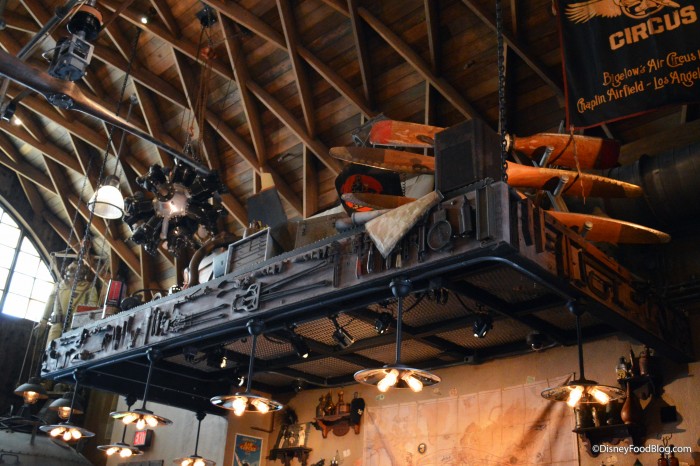
The Hanger is all dark wood with walls filled with weird and even dumpy collectibles. With a menu that is 90% items in bottles and exotic glassware, this is the ultimate man cave of Disney Springs.

floridatraveler-hanger-inside-decor

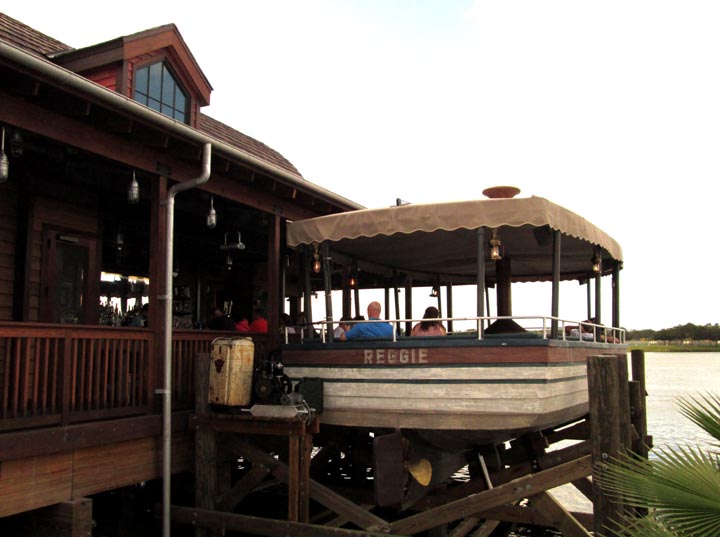
When your eyes adjust to both the dark and the wild scenery, you note there is a huge outdoor waterfront patio attached to a clever dry-docked steamboat called “Reggie.”  The staff is very friendly and loves the down and out theme.

flroidatraveler-hanger-reggieboat

The Reggie Boat For Seasick Diners

There is a limited but very creative menu.  I suggest you look into the amazing rolling boulder sliders, the she-deviled eggs, and something called Lao Che’s Revenge.

floridatraveler-hanger-food

A Wild Food Supply At The Hanger

Posted in disney, disney springs, Florida Food, food, Restaurants, travel, Walt Disney World, wdw | Leave a comment

Lake Wales Is Scenic Florida Beyond Bok Tower

Chalet Suzanne closed last year when the Hinshaw family retired, leaving beautiful Bok Tower on 289-foot Iron Mountain as Lake Wale’s lone super attraction. But if visitors stop by downtown Lake Wales, they will be impressed with a small town that has preserved its architectural treasures.

When the Atlantic Coastline Railroad reached Babson Park in 1911, C. V. Tillman, B. K. Bullard, E. C. Stuart, and C. L. Johnson formed the Lake Wales Land Company. Seeking Northern residents they hired engineer A. C. Nydeggar to plat a city that was a gem in small town planning.  In 1930 the famous Olmstead brothers landscaped the city of Lake Wales and neighboring Bok Tower with its Mountain Lake resort.

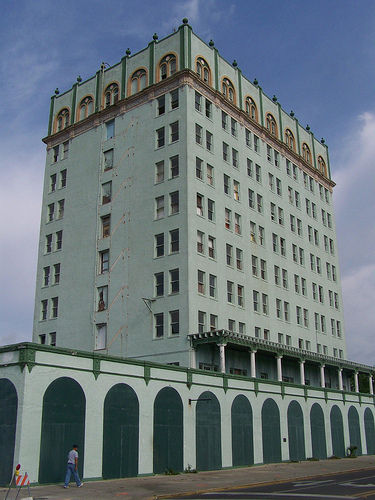
It is appropriate that Park Avenue is Lake Wale’s Main Street started by the ten-story DIXIE-WALESBILT HOTEL (115 North First Street).  Built in the Bust year of 1926, the Grand hotel has seen many lives with a retirement residence being the latest.

lake-wales-dixie-hotel

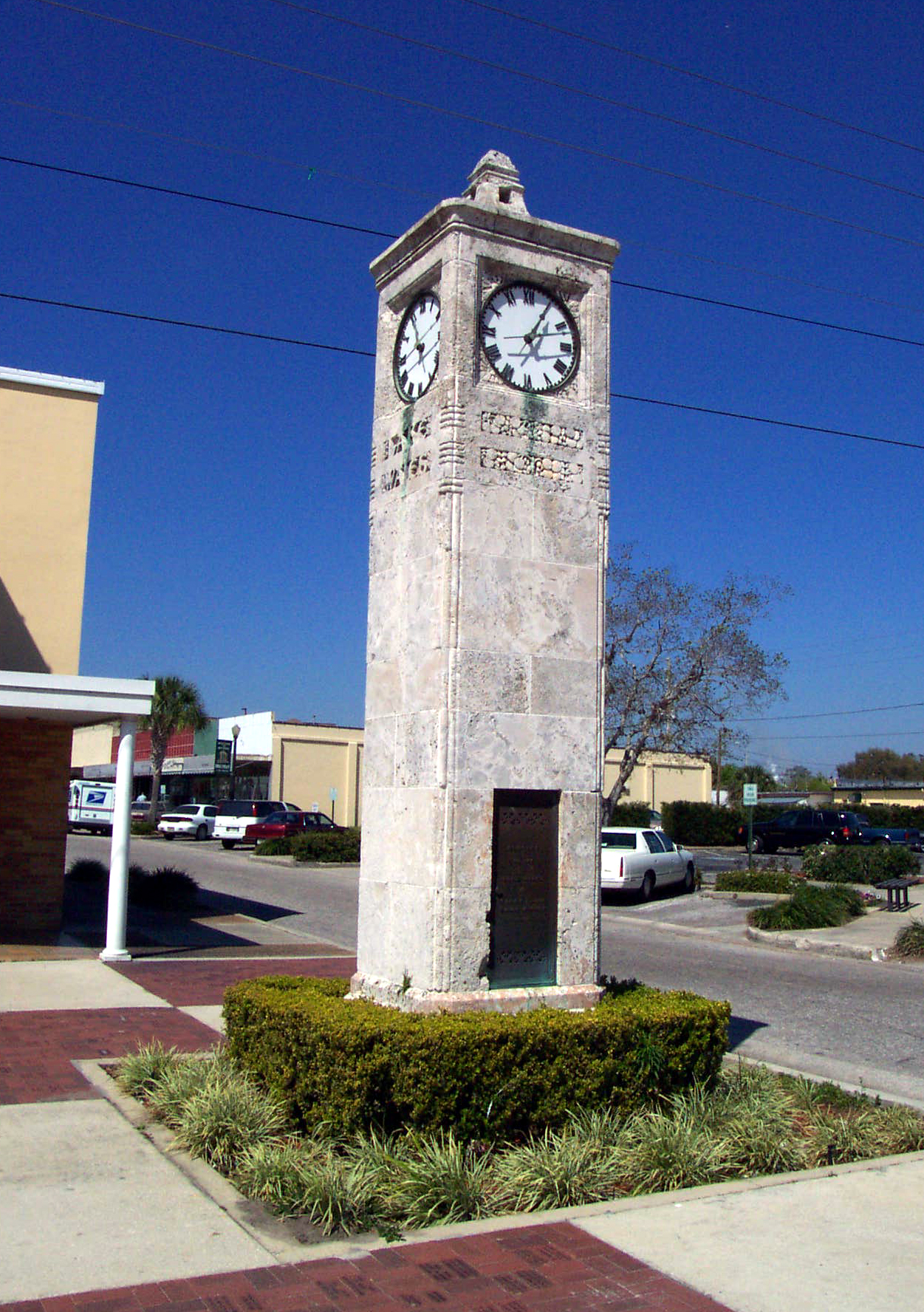
At the start of Park Avenue is the town symbol, the 1921 TOWN CLOCK, which once stood by the railroad tracks to welcome visitor.  Now it marks the Town Square.

lake-wales-the-clock

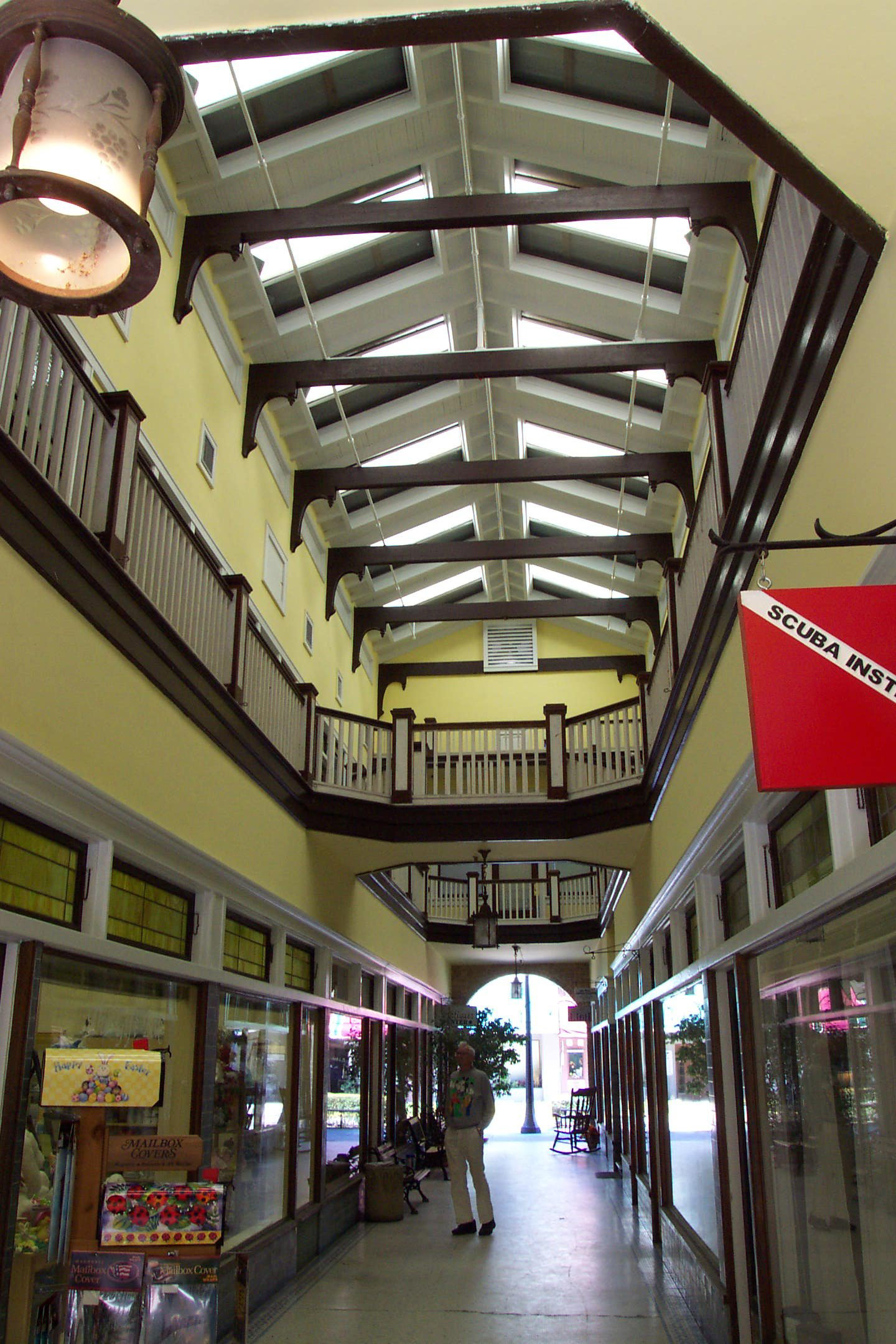
Downtown Lake Wales is compact and small, but that has helped preserve its architectural heritage.  At 229 East Park Avenue is the lovely 1924 RODESBILT ARCADE designed by Jesse T. Rhodes in a Mediterranean Revival style.  If you think the arched  entranceway is going to reveal a gorgeous interior and ceiling, you are correct.

lake-wales-arcade7

Next door is the two-story 1920 J. Y. RHODES BUILDING (255 East Park Avenue) and the LAKE WALES PHARMACY (245 East Park Avenue) started by pioneer T. J. Parker.   Lake Wales hasn’t allowed ugly modern buildings break up the downtown profile.

Across the street was one of the centers of Land Boom activity: the 1919 WESTERN UNION BUILDING (340 East Park Avenue).  At 250 East Park Avenue is the 1915 LAKE WALES STATE BANK, a Greek Revival brick structure with powerful Tuscan columns.

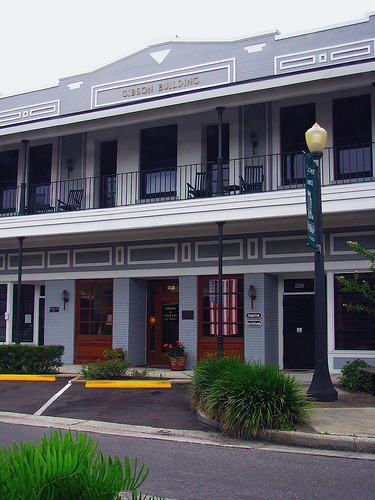
lake-wales-gibson-building

On the next commercial street Stuart Avenue are two of Lake Wales most attractive structures: the 1926 two-story GIBSON & LILLY BUILDING with its iron posted Mediterranean style, and the SCENIC THEATER (254 East Stuart Avenue) whose 400-seat capacity in 1920 showed the builders hoped for a high society community.

Nearby is the block-long two-story 1919 BULLARD BUILDING that at one time housed a drug store, barber shop, post office, and meat market at once.

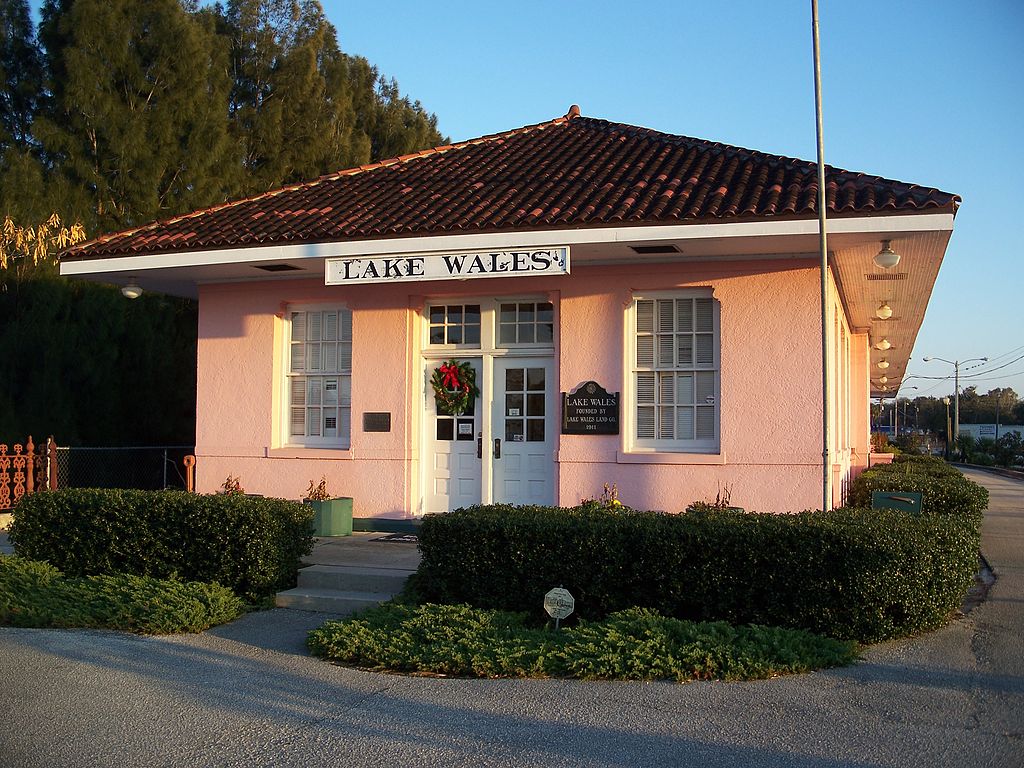
OTHER BUILDINGS:  Driving along the Scenic Highway (ALT US 27), you will locate other spots but you should go first to the Depot Museum at the 1928 ATLANTIC COAST LINE DEPOT (325 South Scenic Highway), one mile north of downtown.  The Depot has a historic guided tour map of Lake Wales and lots of interesting artifacts.

POLK co -Lake_Wales_ACL_depot01

LAKE WALES ART CENTER (1099 Hesperides Road) was the Church of the Holy Spirit, a Spanish Colonial masterpiece with a bell tower.  Located on the crest of a hill, the views of the region are beautiful.

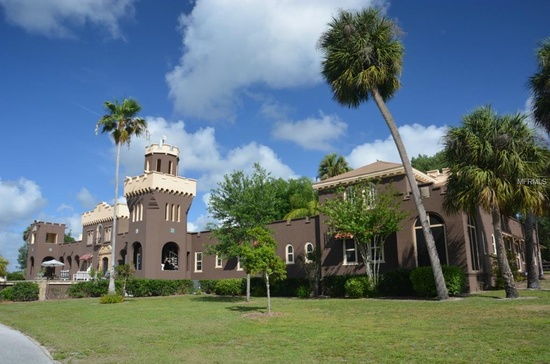
The most spectacular house is two miles northeast on Lake Amoret: the 1923 mansion of realtor I. A. Yarnell known as CASA DE JOSEFINA.  The 25-room estate with its 9 bedrooms and 8 bathrooms looks more Moorish than Mediterranean and has an exotic parapet.

floridatraveler-lakewales-casafrontage

floridatravlerlakewales-casajoint

Posted in florida history | Tagged , , , , , | Leave a comment

Halloween Is A Creepy Big Business In Florida

In recent years Halloween has become a big fund-raiser for organizations and non-profits from zoos to parks.   In Florida Halloween has become a big business.

Considering the fact that October was once considered a between time for vacationing in Florida, Halloween special events have drastically boosted revenues at Florida’s major theme parks.  They are so popular, the ghosts are now arriving six weeks before the actual Halloween night.

Although my wife and I have been annual pass-holders at Walt Disney World since the Florida-resident oriented tickets have been offered, we would have to pay extra to visit Mickey’s Not So Scary Halloween at the Magic Kingdom.

floridatravelerMickey’s-Not-so-Scary-Halloween-Party-Horsemean

These special events which require additional expenses are often a big surprise to families planning a Disney vacation on a budget.  This year’s G-rated spook show runs from September 15 to November 1.   And guess what?  Mickey’s Very Merry Christmas Party starts weekends November 8th to December 18 with more added ticket costs.

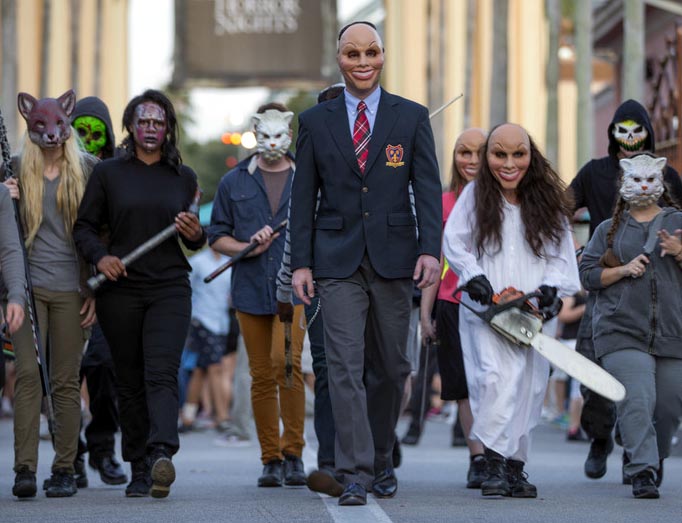
Universal Studio’s R-rated Halloween Horror Nights attracts teens and young adults in record numbers.  Unlike Disney guests are not allowed to wear costumes although one might debate that fact when you see what people wear.  And of course, as a special event, it requires a special ticket.

floridatraveler Halloween-Horror-Nights-orlando

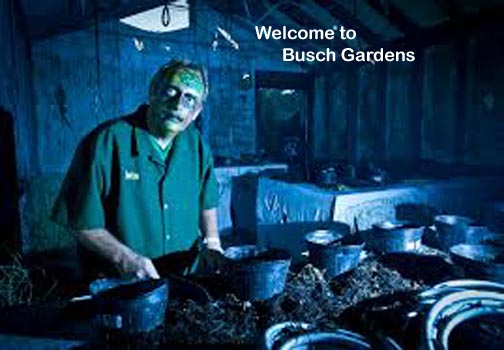
Busch Garden’s Howl and Scream resembles Universal’s mature theme.  At least they allow all the animals to go to bed without seeing all the monstrous activities.

floridatravelerhowloscreambusch 2

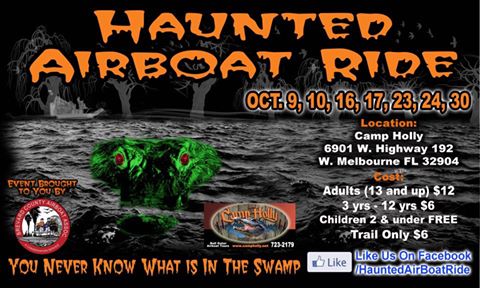
At least there are some Halloween groups that take a more natural approach to operating a scare show.  Off US192 in Melbourne Camp Holly takes visitors on a Haunted Airboat Ride up the spooky St Johns River swamplands to a haunted campground.   Red-eyed alligators stare at the boaters and even a wild boar or to joins the program.

floridatravelerhaunted airboat ride

Posted in florida history | Tagged , , , , , | Leave a comment

Brooksville Preserves Its History Well

BROOKSVILLE, located 50 miles north of Tampa, is a wonderful city of hills, ranging in elevation from 175 to 274 feet. Coupled with its condensed area (2.77 square miles) and its long history of successful planters, growers, and cattlemen, Brooksville is more a reflection of “the Old South” than other West Coast towns. Its Southern background is reflected in its name, honoring South Carolina Congressman Preston Brooks who is best noted for hitting abolitionist Senator Charles Sumner on the head with Sumner’s cane.

floridatraveler brooksville-banner

WHERE TO START: You can reach  Brooksville from the east off I-75 or from the south on US41 (BROAD STREET)

Just past Lemon Street, you’ll notice on FIRST METHODIST CHURCH, 109 South Broad which was organized in 1891.

CROSS ORANGE, unless you wish to take a short detour north on Orange to the JOHN J. HALE HOUSE (A), a 3-story 1888 frame house owned by a merchant and railroad trustee. Note how the breezeway that once separated the kitchen is enclosed.

floridatraveler brooksvillemap

At 31 Broad is the PRESBYTERIAN CHURCH BUILDING, converted in 1947 by Henry Carlton Sr. into new location for his grocery founded in 1910.  Up the road at 120 Broad is the DIXIE THEATER (1926), where the only talkies are businessmen doing commerce.

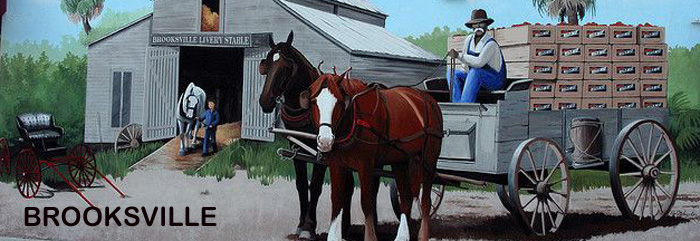
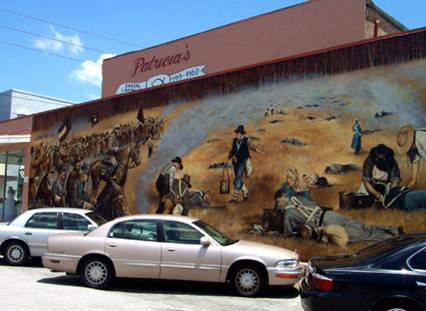
The next intersection is the center of Brooksville. At 1 Main Street is the FIRST NATIONAL BANK (1910), a two-story brick structure with its original cast iron columns.  On the south-side of Broad you should see the massive wall mural of “The Brooksville Raid” by Antonio Caparello.  The walls of buildings in Brooksville have several neat historic murals in the downtown area.

floridatravelerbrooksvillemural

In the northeast corner stands the HERNANDO COUNTY COURTHOUSE (1913), a rectangular Classical Revival brick edifice designed by William A. Edwards, complete with Ionic columns. Despite two major additions over the years, the courthouse has remained one of the most photographed public buildings in Florida.

TURN LEFT (north) ON MAIN STREET (called Howell above Broad). At 115 North Main is R.R. DINGLE DEPARTMENT STORE (1912), one of the early large firms. CROSS JEFFERSON STREET. On your left is BACON’S DRUGS (1926) and on your right the notable HERNANDO STATE BANK (1905), where J. A. Jennings was first President.

At 115 North Howell is WEEKS HARDWARE (1913), a two-story brick owned by John Weeks, first President of the First Federal Bank. Across the street is the J. M. ROGERS DEPARTMENT STORE (1912), 120 North Howell.

CROSS FORT DADE. On the right you can stop and get more local information at the CHAMBER OF COMMERCE . 101 Ft. Dade Avenue, or at the nearby  1950  FREDERICK EUGENE LYKES JR LIBRARY, a great resource for local history..

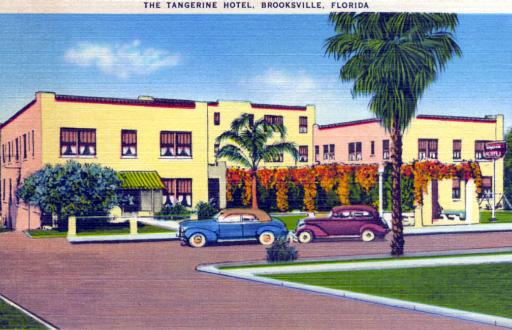
As you go north the road curves and becomes Howell.  At 201 Howell is the 1970 CITY HALL.  At 253 North Howell (Howell) is the W. A. FULTON HOUSE (1880), a lovely 2-story double verandah home of the organizer of the Florida Citrus Exchange. Look carefully to see where the dog trot design once existed.  At 307 Howell is the TANGERINE PLACE (1925), a mission style hotel where in 1931 City Attorney Herbert Smithson was gunned down by rum-runners. Across the street at 310 Howell is the 1905 ROY CLEF HOUSE a lovely Colonial Revival.

floridatravelertamgerinehotelbrooksville

Brooksville’s residential streets are lined with interesting buildings and often covered by huge oak trees. If you are driving you might want to go block by block as far as Bell Avenue, where the OLD HERNANDO HIGH (1925) is located.

If walking, I would but skip tree-lined IRENE (you can see it later) and TURN RIGHT ON OLIVE STREET. At 61 Olive is the ST ANTH CATHOLIC CHURCH (1908). nicely converted into a cool, private dwelling. (I wonder if there is a church cemetery in back.) At 48 Olive is the most noted Brooksville home, the residence of GOVERNOR WILLIAM SHERMAN JENNINGS  (1880). The three-story frame house has a wonderful octagonal bay tower and is in fine condition. Jennings was Governor in 1900 and his wife May Mann, a leader for women’s rights, started the Florida League of Women’s Voters.

floridatravelerbrooksvillecathch

GO DOWN BROADWAY and turn into IRENE where you’ll love the old road and the W.E. LAW HOUSE (1890) a Colonial Revival at 58 Irene.  The backside of the larger Olive Street houses shows some old barns.

 RETURN TO MAIN STREET, heading south past the Courthouse. At the southeast corner at 2 Broad Street is   the J. A. JENNINGS BUILDING (1915), a two-story brick vernacular started by the city’s first clerk (1880). South Main has a lot of older commercial buildings including the 1885 GRIMSLEY COUNTRY STORE BUILDING, at 100 S. Main. At 131 South Main is the 1931 BROOKSVILLE WOMAN’S CLUB

CROSS LIBERTY STREET. At 140 South Main is DOGWOOD STATION (1919), a popular place to shop. At 210 South Main is MONTAINEER ANTIQUES (1925) in a classic Sears & Roebuck catalog house.

TURN RIGHT ON EARLY and drive to BROOKSVILLE/MAGNOLIA. TURN RIGHT to see the fine OWEN WHITEHURST HOUSE (1896), 321 South Brooksville, a two-story double veranda house. TURN AROUND GOING ORTH ON BROOKSVILLE to 133 South Brooksville and the COOGLER HOUSE (1910). Theodore Coogler came from South Carolina as an early settler. Colonel F. B. Coogler was the town’s first treasurer (1880).

YOU’LL NEED YOUR CAR TO DRIVE EAST ON LIBERTY:  At Liberty and Saxon Avenue is the once famous: ROGER’S CHRISTMAS HOUSE where. Mary Roger’s Christmas gift shop once attracted visitors for miles around when in 1972 she turned a bookstore into a popular Christmas store complex.  The store closed in 2014 but her legacy to Brooksville will be remembered.  Next door is the 1864 FRANK SAXON HOMESTEAD, a Queen Anne Revival restored by Mrs. Rogers.

YOU MUST VISIT the HERITAGE MUSEUM, 601 Museum Court at 600 West Jefferson, located in the 1850 Stringer House, a Queen Anne masterpiece with a four-story tower. F. L. Stringer was a State Senator and judge.

floridatravelerbrooksvillemuseum

 CHINSEGUT HILL, located five miles north off US41 by Lake Lindsey is worth the drive. Colonel Byrd Pearson of Columbia, South Carolina, founded the plantation. His daughter wed Governor Francis P. Fleming. Colonel Raymond Robins, social economist and Progressive Party leader, owned the estate for years and donated 2,000 acres to the State. Today University of South Florida uses the mansion for private retreats, but the exterior of the house ion a hill is beautiful.

floridatravelerusfdomain

Posted in florida history | Tagged , , , , , | Leave a comment

Everglades City: Still Florida’s Last Frontier

You can’t travel any further south along the Florida’s Gulf of Mexico than EVERGLADES CITY and CHOKOLOSKEE, at the entrance to the Western Everglades.  In many ways this area is still Florida’s last frontier,  a place for fishermen and nature lovers and people who want to keep a low profile.

floridatravelereverglades-cityairview

These villages were isolated  frontier until 1923 when Barron Collier made Everglades City the seat of Collier County and supply depot for the construction of the Tamiami Trail highway across the Everglades. . Prior to the boom, this isolated region was Florida’s last outpost for fur trappers, plumage hunters, Cuban fishermen, and people with a disdain for modern civilization.

Everglades City can only be reached by BOAT or DRIVING SOUTH ON FL29, past the 1926 Everglades High School, pride of a town that has lost population since 1930. A. You’ll notice houses on stilts and air boat rides along the river.

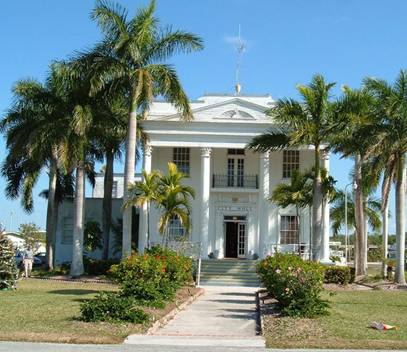
TURN RIGHT ON BROADWAY, past the Spanish-style railroad depot with its barrel tile roof and past the frame Community Church. You won’t miss the OLD COLLIER COUNTY COURTHOUSE, a 1926 four-columned Greek temple that seems totally atypical for a small village. But this town once had a trolley and other touches of civilization during the Florida Land Boom.

At Shorter Avenue is the (1) COMPANY LAUNDRY BUILDING (1928) (now the Chamber) and the (2) BANK OF EVERGLADES (1926) which is probably the strangest setting for a fine bed and breakfast and spa you’ll ever see.

floridatravelerbankofeverglades

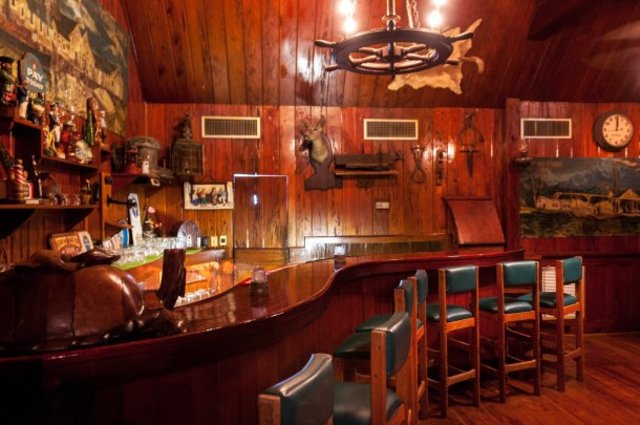
At 200 Riverside Drive by Broadway is the wonderful ROD AND GUN LODGE (1890), built by Collier to entertain friends, but expanded to serve tourists. Go inside and imagine Ernest Hemingway and Ted Williams having a drink at the bar after a serious day of bone-fishing in the Ten Thousand Islands. This is a unique place to stay or eat or rent a boat.

floridatravelerrodandgun1

floridatravelerROD&GUNbar

CONTINUE SOUTH ON FL29 to reach CHOKOLOSKEE ISLAND, but stop at the 80-foot E. J. HAMILTON OBSERVATION TOWER for a view of the 10,000 Islands or visit the EVERGLADES NATIONAL PARK HEADQUARTERS, which has boat tours into the Everglades’ Western limits.

This area looks like a wonderful outdoor wilderness,  but please remember that between May and October, this tropical areas are the domain of mosquitoes and bugs. A small causeway takes you to CHOKOLOSKEE ISLAND,  150-acre mound of land in a shallow inland sea.  A large campround and RV park dominate the northern tip of the island, but as you drive southward you’ll see rustic old cottages.

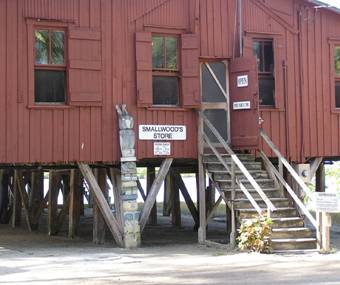
Follow the signs to the amazing (3) SMALLWOOD STORE (1917), a one-story board and batten trading post on pilings. Ted Smallwood once owned the entire island in 1896 and his structure was grocery, post office, and symbol of the end of the Florida West Coast.

floridatravelersmallwoodstore1

 Here Seminole Indians came by boat to trade furs for food items.  It was in front of the store that the locals gunned down the notorious outlaw Edgar Watson, who kidnapped workers for his gruesome sugar cane plantation hidden in the swamps.

Look south into the swamps and imagine the Seminoles arriving by canoes.

Posted in florida history | Tagged , , , , | Leave a comment